



What are the factors to consider when selecting a compressed air boosting system?
With the increasing demand for compressed air stability in
industrial production, the application of compressed air pressurization
systems in the industrial field is becoming more and more widespread.
When selecting a compressed air boosting system, it is necessary to
comprehensively consider the following key factors to ensure the stable
operation and efficient use of the system.
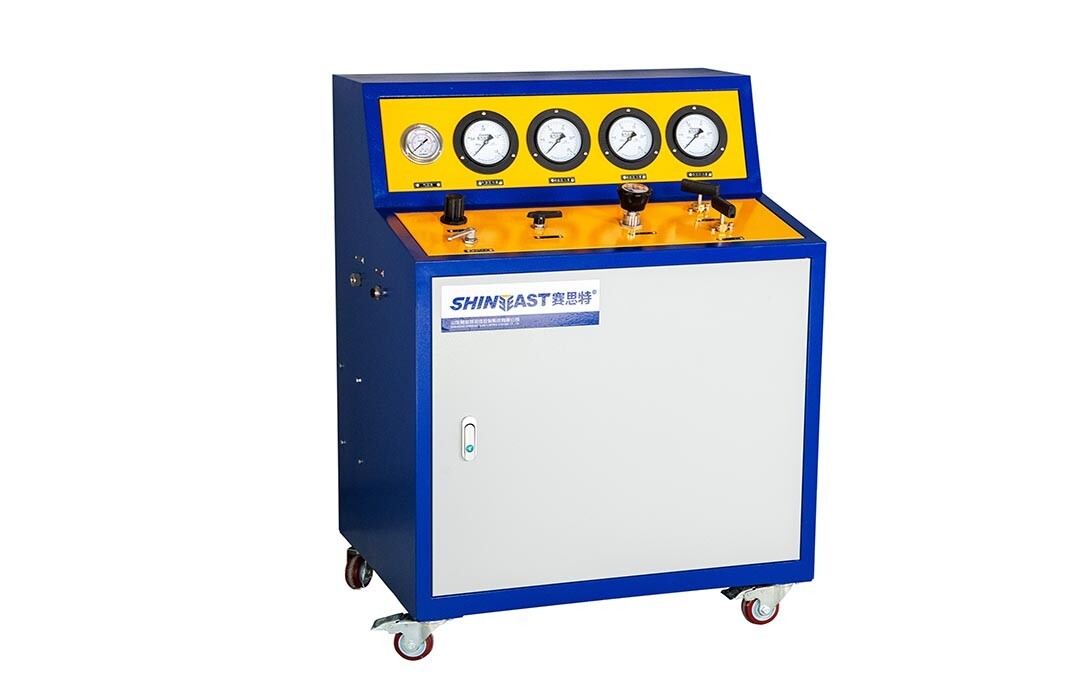
Typical applications of compressed air boosting systems: providing air tightness testing for valves, fittings, pressure vessels, etc. Partial pressurization of the production line, inflation of high-pressure tires, and pressure testing of cans. The selection of compressed air boosting system is directly related to whether it can meet the practical application needs. Wrong choices can lead to low system efficiency and even inability to meet the requirements of the production process. Efficiency and reliability are key indicators for measuring the quality of compressed air turbocharging systems. High efficiency and reliability can reduce operating costs and extend system lifespan.
The working principle of compressed air pressurization is to use the different size to area ratios of the pistons at both ends of the internal booster pump in the system. By using the different area ratios at both ends, the large area end piston is driven to move back and forth by the driving gas, and the small area end can obtain high pressure through action, thus completing the pressurization of the gas. The ratio of the area of the pistons at both ends is different, and the pressure of the boost is also different. The ratio of the area ratio at both ends can be called the boost ratio, and the higher the boost ratio, the higher the boost pressure.
The pressure after air pressurization should be determined first. Need for pressurized air flow
Is it possible to increase the pressure twice, suitable for situations where high pressure is required locally. Compared to air compressors, it has higher pressure and lower flow rate, making it suitable for local boosting
Select the appropriate compressor type and specification based on the air pressure and flow requirements for the output flow rate of the air compressor.
Ensure stable operation of the system within the ambient temperature range.
System boost efficiency, choose a high boost ratio compressed air boost system to reduce energy consumption.
Reliability, considering the stability and lifespan of the system during long-term operation.
Maintenance cost is an important consideration factor for the long-term operation of the system. Taking into account the purchase cost, installation cost, and future maintenance cost.
Technical support, choose manufacturers with good technical support to receive timely and effective assistance when encountering problems.
Product certification, checking whether the product has passed relevant quality certifications such as CE, ISO, etc.
System working environment, ensuring that the environmental conditions in which the system operates do not have a negative impact on system performance.
In summary, the selection of compressed air turbocharging system requires comprehensive consideration of multiple factors. The correct selection is not only related to the stability and efficiency of the system, but also affects long-term operating costs and investment returns. Therefore, a reasonable evaluation and selection of suitable systems are of great significance for ensuring production quality and improving industrial production efficiency. When making a selection, it is advisable to repeatedly consider the factors that need to be taken into account when selecting a compressed air boosting system, in order to ensure the best decision is made.
Typical applications of compressed air boosting systems: providing air tightness testing for valves, fittings, pressure vessels, etc. Partial pressurization of the production line, inflation of high-pressure tires, and pressure testing of cans. The selection of compressed air boosting system is directly related to whether it can meet the practical application needs. Wrong choices can lead to low system efficiency and even inability to meet the requirements of the production process. Efficiency and reliability are key indicators for measuring the quality of compressed air turbocharging systems. High efficiency and reliability can reduce operating costs and extend system lifespan.
The working principle of compressed air pressurization is to use the different size to area ratios of the pistons at both ends of the internal booster pump in the system. By using the different area ratios at both ends, the large area end piston is driven to move back and forth by the driving gas, and the small area end can obtain high pressure through action, thus completing the pressurization of the gas. The ratio of the area of the pistons at both ends is different, and the pressure of the boost is also different. The ratio of the area ratio at both ends can be called the boost ratio, and the higher the boost ratio, the higher the boost pressure.
When
the system reaches the required boost pressure, the internal boost pump
will stop working, no longer consuming driving gas, and the system will
be in a stable state and no longer work. When turbocharging is needed
again, the system will automatically start, and frequent pauses have no
impact on the turbocharging system. The compressed air boosting system
is driven by gas and does not require electricity, producing no sparks.
It also has a compact design and small size for use in various
application environments.
The pressure after air pressurization should be determined first. Need for pressurized air flow
Is it possible to increase the pressure twice, suitable for situations where high pressure is required locally. Compared to air compressors, it has higher pressure and lower flow rate, making it suitable for local boosting
Select the appropriate compressor type and specification based on the air pressure and flow requirements for the output flow rate of the air compressor.
Ensure stable operation of the system within the ambient temperature range.
System boost efficiency, choose a high boost ratio compressed air boost system to reduce energy consumption.
Reliability, considering the stability and lifespan of the system during long-term operation.
Maintenance cost is an important consideration factor for the long-term operation of the system. Taking into account the purchase cost, installation cost, and future maintenance cost.
Technical support, choose manufacturers with good technical support to receive timely and effective assistance when encountering problems.
Product certification, checking whether the product has passed relevant quality certifications such as CE, ISO, etc.
System working environment, ensuring that the environmental conditions in which the system operates do not have a negative impact on system performance.
In summary, the selection of compressed air turbocharging system requires comprehensive consideration of multiple factors. The correct selection is not only related to the stability and efficiency of the system, but also affects long-term operating costs and investment returns. Therefore, a reasonable evaluation and selection of suitable systems are of great significance for ensuring production quality and improving industrial production efficiency. When making a selection, it is advisable to repeatedly consider the factors that need to be taken into account when selecting a compressed air boosting system, in order to ensure the best decision is made.
previous page:Air driven gas pressurization system
CONTACT US
Please use the form below to get in touch.
If you need a reply we will get in touch as soon as possible.